Well, I entered an Peace Corps Bulgaria essay contest because it's been a while since I've written anything on this level and it sounded like fun! It's a bit on the depressing side as the theme was barriers to impact - as in, why isn't Bulgaria developing from all the financial support it's receiving? In fact, it is developing, as I've seen from my return here, but it still has some significant hurdles to overcome. To my Bulgarian readers: Please realize this not how I feel about Bulgaria; it is instead, how I feel about development in Bulgaria. It might seem a bit negative, but any Bulgarian that knows me, knows I love it here and wouldn't trade it for anything!
Intro to the Bulg
I love Bulgaria, but when I walk along most of the sidewalks here, I have to constantly pay attention to where I step. If I’m not careful, I end up with a shoe full of mud or a twisted ankle. I have to play the same game on roads where sidewalks don’t exist. Judging from new construction, I surmise that these decrepit roads and sidewalks were not originally built this way. I’m hoping the same is true for the gray and crumbly block apartments that I see in various states of disrepair. It’s a difficult image to analyze. How did it come to be like this? Are their concrete and asphalt that different from ours? Most likely not. So, where is the maintenance? Where is the effort? Where is the care?
After copping out by saying, “This is Bulgaria,” most Bulgarians elaborate to say that there is no money for these things. I disagree. I’ve seen scores of useless hotels built in order to launder money. I’ve seen the seven malls of Varna that appeared out of nowhere in just a couple years, with five more on the way, as money laundering schemes develop. I’ve seen police cars ranging from 35-year-old Ladas to brand new BMWs and Corvettes - in the same city! I definitely think there is money for things gray and crumbly, it’s just spent on other priorities. What impact barrier is it that upholds these priorities and inhibits the development of simple infrastructure? What kind of spending responsibility exists in this culture that dooms it to its developing status?
How can a guy or gal, laying brick or herding kids through school, making 15 bucks a day, afford the latest and greatest, fancy-pants new cell phone? It strikes me as odd that a cell phone would get priority over safe and healthy cooking supplies, leaky faucets, or drafty windows and doors. Technology and toys are fun, but responsibility does more for a person than entertainment.
The desire to be like the West is strong, yet the West’s struggle to be what it is today is overlooked. I don’t hear people saying that they need to work really hard to achieve goals. I don’t see people organizing themselves to work together as a team for the benefit of a large group, much less the country. Instead, I see people in cut-throat competitions for grants. I see people keeping progress in secrecy for fear of losing the next round of funding to their neighbor. I see blatant abuses of aid, inefficiencies, and waste. I see Bulgaria wanting to go to the moon, but I don’t see them building any rockets.
My Peace Corps service taught me to appreciate the limitless possibilities in the USA. I felt sorry for Bulgarians graduating from high school and college with the promise of very little potential for a prosperous life. How did the Western world develop to offer these opportunities? Why is there such a difference?
Time and again, I hear Bulgarians talk about their relatives in the USA who have found a good life. I’ve heard countless young people talk about going somewhere else in Europe or to the USA to find a job, because no possibilities exist in Bulgaria. I can’t seem to convey that tough times have existed everywhere, even in the USA. I try to explain that when opportunities are not immediately available, success comes from creating a new opportunity. If there are no jobs in Bulgaria, why not create something? If the desire is for work, why take a risk and travel so far when taking a risk at home can be equally beneficial, and you have support of home? I think this is a significant difference between the developed and developing worlds. Is there a way to inspire them to be on a better path? It’s not that the entrepreneurial spirit doesn’t exist here, but it’s difficult to foster it when the common solution is to long for opportunities in foreign lands. Why can’t people in developing countries simply work hard to escape their rut rather than working hard to escape their country? Is this more than a matter of working hard?
The common explanations for developmentally challenged societies are: lack of education, lack of equity, lack of equality, lack of access, and abundance of corruption - all entwined within a puzzle whose culturally different pieces just don’t fit with the surrounding pieces. Unfortunately, there are more, less prevalent, barriers that impact development, which are equally as damning.
Barrier: Misperception of Development Needs
My first trip on a bus in Bulgaria painted a very clear picture of why development was needed here. The driver was smoking with one hand and swerving to miss potholes with the other. I saw gravity defying shacks made of earth and wood where people lived. I saw people driving donkey carts that blocked traffic for old diesel cars belching smoke into the air. I saw old factories, long since abandoned, with their windows broken out and equipment rusting away. Strangely, their appearance wasn’t too dissimilar from the appearance of the dirty, half-bleached colors I saw on storefront signs in the small villages through which we passed. I made a lot of quick observations and used my superior logic to arrive at quick conclusions.
After mastering the language, I was able to probe further into Bulgaria’s problems. Talking with people at length gave great insight into other problems beyond infrastructural decay and neglect. It seemed to me that there was a mentality here that was simply not conducive to modern ways. Obviously the country and its people were still struggling to be free from the firm grip of communism.
At this point, I was my own biggest barrier to any kind of meaningful impact. I made many superficial observations and jumped to a lot of conclusions. These are not skills listed on my resume, but I’m pretty good at them, nonetheless. One of the biggest mistakes Volunteers make is being motivated to save the world without realizing how significant cultural differences can be. After a year or so - and some significant deeper understanding - I re-evaluated things, asking more questions rather than dolling out answers.
Generally speaking, in the West, we take for granted what we have, and we assume everyone else wants to be like us. We claim that we are civilized and developed, but these words are our own. We look at the developing and undeveloped worlds and conclude that they need help. We perceive that they want to be developed. How else can they rise from the depths of their destitution to become more like us? We forget, though, it's not the poor man that defines poverty - it's us. Who are we to make such judgments?
We think we're very comfortable in our lives, and we are a giving people so logically we want to share the way of our comfort with others. We never stop to ask ourselves if other people are already comfortable in their own way. We can also tend to be a bit exploitative and think that if more people share the same comforts that we enjoy, it validates our way and makes it less likely to change.
With our advanced marketing and agendas, we created a feeling of wanting. Tried and tested, they claim success again and again. The Coca Cola company spends exorbitant amounts of money and effort on international advertising, ensuring that every last human knows what they're missing. MTV dominates moral influence on young people across the globe. Even in the world of aid, organizations give with a price tag of their agenda.
Mormons run around the world offering free English lessons to heathens - so long as the content of those lessons is based around the Book of Mormon. Just as I, in my environmental education post, taught English to my community - so long as the topic revolved around ecological issues in Bulgaria. Why? Because that’s what we perceive them to need, and fulfilling that need makes us rich and righteous. But do our efforts really do any good for these people? Are their lives better after we’ve encountered them or have we just given them a taste of something exotic - something they can’t hope to taste again after we’ve gone? We think we know what these developing people need, and we think what we’re doing is clear, but ‘help’ is an ambiguous word that is not easily translated.
Barrier: Misunderstanding of Offered Aid
As soon as I arrived to my first post, my host wanted me to apply for a $25,000 grant to remodel a museum, which had just been remodeled the previous year. Thinking I was missing something, due to a language barrier, I went for it. While it was pending, my host asked what other kinds of grants we could get. I asked what kinds of projects would they like to implement and they said it didn’t matter, just get them money. “You’re a Volunteer, you have to get us money.” I explained that I was more of a community resource, here to assist with development projects, not simply to generate revenue. “No. You have to get us money.”
Volunteers are looked at in many different ways by hosting organizations, from money makers to desk trophies. As I complained about my situation, I heard other Volunteers talking about having absolutely nothing to do. Their host organizations just wanted the social prestige that came with having an American working for them. One Volunteer arrived at post to find the host already had all their needs and wants completely satisfied. Other Volunteers realize there was work to do, but couldn’t figure out how to help. In fact, they were not really given opportunities to help. One situation included a Volunteer arriving to a post a week before the host organization dissolved!
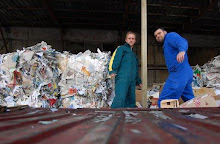
A friend of mine arrived at site to work for the local municipality. Their main goal for him was to find a solution to their landfill issue. The Volunteer thought that teaching about recycling and establishing a small scale recycling program in the town was probably the best place to start. Then they dragged him to the landfill, which was about a kilometer upstream from the center of town, on the river, literally. They finally realized that landfills shouldn’t be placed on the river, upstream from where you live. Not only did they want this Volunteer to remediate the area of its thousands upon thousands of tons of solid waste, they also wanted an entirely new municipal waste disposal policy.
One of the worst positions a Volunteer can be in, is one where the host organization looks upon the Volunteer as someone who will do all the work for them. This type of misunderstanding contaminates the world of aid across the globe. It’s a misunderstanding in which the receiver of aid believes the aid will solve their problems. They miss the point that the aid is a support structure so that they can fix their own problems - and this is a huge mistake.
When the West enters a developing country, with goals of providing aid, the ‘giving’ aspect is understood, but that which is being given gets lost in translation. If the organization is progressive enough to want the aid as help instead of as a title, they often expect that aid to be everything they’ve ever needed. This creates a crippling dependency; a situation that is not sustainable, nor helpful. Knowing this, Volunteers are taught extensively about the priority of sustainability when they enter the country. Unfortunately, despite an attempt at preparation, there are still other factors that impede useful impact.
Barrier: Apathy
There was a small green space near where I lived in Varna that I passed every day on my way to and from work. I was very pleased one day to see it getting a complete makeover into a nice park. I was then very frustrated to see that within three weeks of its completion, it was totally destroyed. The 5-gallon sized trash cans were burnt and/or smashed in. The brick tiles, which made nice paths through the park, had been pulled up and smashed. Benches were scarred with graffiti. I was so disgusted with the thought of vandals destroying a community place for no good reason. I assumed it must have been the drunk teens I saw from time to time who had nothing better to do. And then some further observation disgusted me even more. Walking by, I noticed a child, maybe three or four, pull up one of the remaining bricks from the pathway and hold it over her head, while she looked at her mom for either approval or discipline. Mom gave, what I interpreted as a blank stare, as if to say, “So?” So, the child slammed it down on another brick, shattering it to pieces. Punishment from mom? Nope. She took another drag from her cigarette and turned back to her friend to continue their important conversation.
Much of the developing world can see Western life on TV and in pictures. The grass is pretty green, and it creates a wanting of what they see. If they get something nice, but not as nice as they see, they don’t respect it. Maybe these people had seen better parks, and since this one wasn’t as good, why treat it like it was?
It’s so disheartening to present a way that leads to prosperity only to have it met with disinterest. I presented many paths toward Western-style success that were received with comments ranging from, “No, that will never work” to “No, that’s too hard.” They don’t recognize that the West struggled and worked diligently to achieve its success. They often miss that the West is still struggling, too. They instead want the West’s successes without going through their own struggle. They seek shortcuts and handouts that they think will elevate them, but they’re wrong - and when they learn they’re wrong, they give up.
When shortcuts are sought and preferred to real, hard work, you end up where you began. One day, during training, we asked the mayor of our village why there were so many stray dogs. It was something we weren’t used to. The following day, we heard gun shots and yelping during our language lessons. How much easier is it to exterminate the “stray dog problem” than it would be to teach the community what it means to be a responsible pet owner? Did killing the strays help the situation? No. In a few months, there were again strays roaming the streets. The root of the problem wasn’t addressed because a simple solution was considered good enough. But that’s just not good enough.
Conclusion
In generalizing these points, I have omitted the part of the population that earnestly wants change, and honestly works hard. These people are not barriers to impact, they are the ones making progress. Progress and development are absolutely possible, but there will always be barriers. Philanthropy is a great thing, but it has to be met with a need from those who are needing, not a perceived need from those who are giving. Cultural barriers will always taint understanding and clarity. Mitigating these barriers requires awareness, thoroughness, and ambition from all parties involved. Asking for help to get down a path is perfectly fine, but asking for someone to carry you down the path will only ensure that you’ll be lost once you get to where you’re going. There may be many bumps in the road, but it’s important to be happy with each step you take and to respect that you’re on a road in the first place - gray and crumbly as it may be.
Although this is an essay about barriers, I feel it would be incomplete without at least a mention of overcoming these barriers. Overcoming barriers is achieved by minimizing perceptions, maximizing understanding, and inspiring ambition. Make thorough observations, make sure what is given is understood, and lead by example through hard work. Giving won’t work without inspiring. It’s unreasonable to expect to inspire an entire country, but you can inspire a few people who will, in turn, inspire a few more, and so on and so forth. I changed lives and I blew minds in the Peace Corps, but my most significant impacts never made it into my DOS, and there was no dollar value that could be attached to them.
In my “English” classes, where I secretly taught about ecology, I included an assignment for writing a letter to a government official about an ecological issue. One gal’s takeaway from all this was not the English, nor the ecology - it was the democracy. She thanked me profusely, saying she had no idea she had a voice, and subsequently started her own group to be vocal about issues that mattered to them.
Additionally, my counterpart received an invitation to represent Bulgaria in a European conference on sustainability. He didn’t hesitate to refuse because it meant that he had to present in English. I fought him, tooth and nail, arguing that at the very least, this was a free vacation! It took me weeks to manipulate him into going, and he ended up presenting with great success. In fact, he’s since been invited back every year, and is currently partnering with them on a very prestigious, Europe-wide environmental education project. It took him more than four years to finally thank me for pushing him, but it was totally worth the wait to realize the impact I had made.
If development is to be essential, impact is how it must happen. Why is it so important to develop? Because as a species we have an innate obligation to be our best. The best is who survives, and we, with a caring and giving nature, want everyone to survive. Development is a measurement of our best, and impact is a measurement of our nurture. What can we do to contribute as an individual, a team, a society, a species? How can we be better than we were in order to ensure our continued survival? Grow and inspire. Cultural differences will continue to lead to miscommunications, but it doesn’t mean we give up. It’s important to watch our steps along the way, but if we can pave over the holes of corruption and level the cracks of cultural differences with access to education, equity, and equality, then perhaps shoes full of mud and twisted ankles can be things of the past as we raise our heads and look ahead to the future.


 I keep hearing that the economic crisis didn't hit Bulgaria as hard as the rest of the world because its society hasn't switched to a credit based society like in the States. Then I heard another explanation that was pretty interesting. "Bulgaria's economy has been in a crisis for 20 years. If that's all we know, why should this new crisis affect us any differently?" It was another sobering reminder of how good we have things in the states - even with an economic crisis.
 I got a big piece of redemption over dinner with my former colleagues in Varna. It was like old times, meeting up and cooking a big feast; eating and drinking the night away. I learned that my former counterpart has been working with several other organizations on a really, really big project and he said he owed it all to me! He was referring to an older project that he didn't want to do because he was ashamed of his English. I spent weeks trying to manipulate him into going - saying at the very least, it was a free vacation! He ended up going and presenting very well - so well that they're still working together!
 I was working out with a guy who used to break peoples' legs for defaulting on mafia loans. He was telling me that there were some gypsy guys in the gym and that they were less than people. "They look like people, but they're not." I responded with, "Man, that's a lot of hate..." and let it be for the moment. Later in the workout, I couldn't get passed my 5th rep on one exercise and said that's all I've got, and he told me I was being too negative.
 I was collecting recipes from the landlord's wife. Her daughter was translating everything for me. One of the ingredients was aspirin. She stopped translating for a second, looked up and asked, "Do you have aspirin in the US?" Don't know which is funnier - her question or that aspirin is an ingredient!
 There are two large windows that get opened in the library every day for ventilation. It makes me crazy because I'm here for energy efficiency and environmental education - focusing primarily on how to heat the building. When I asked why they were opened daily, I was told that it was for ventilation. Okay, I understand this, but offered that during the winter I think it would be adequate to only leave them open once a week. The response: "No. Some of the people that come here don't bathe enough."
 A young girl waited for me outside the library one night because she wanted to practice her English. This is not so common because there aren't so many people that speak English here. Immediately after introductions, I asked her if she was a high school student or a university student. She said she's taken university classes but hasn't finished. I asked why not, and she started to cry!
 When I see this sculpture, it's strikingly obvious to me that it's a communist cow. However, The reoccurring answer I got when I asked Bulgarians what it was: "It's art. No one knows what it's supposed to be." According to the artist, it's the lunar landing module.

 I spent my last evening in Silistra, drinking with my landlord, Данчо Манчо – no other place I'd rather be. And as always, it was a ton of fun. As much as I try to describe how great my time is with the Peace Corps and in Bulgaria, I can never quite express exactly how I feel, or exactly how wonderful it's been. It makes me think of a phrase Данчо taught me that has become something of call for fun: Пиенето чисто, мацито голо. Literally, it means, clean drinks and naked ladies. The deeper meaning is: if you want to know the alcohol you're drinking, don't mix it with anything; and if you want to know your lady, you can't know her until she's naked. I find it awfully fitting for my Peace Corps experience in Bulgaria – you can't really know it unless you've been here and done it. While I can't bring home an adequate description of what these last few months have meant to me, I can bring home this glorious smile!